How it unfolded
Stine adopts a technology in practice, works out what it is good for, then teaches it before the textbooks exist. He did this with CAD, BIM, lighting simulation, early-stage energy modeling, and virtual reality. He is doing it now with artificial intelligence at the AIA, at a 160-person firm, and in a graduate seminar.
What the policy says
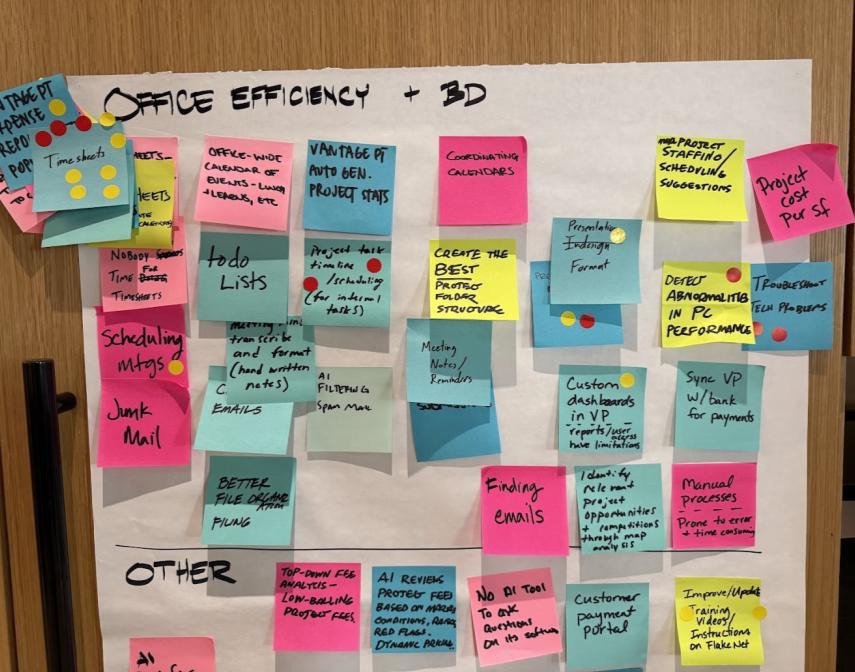
The 2026 update added the enterprise assistant for everyone, approved connectors and MCP servers only, a caution that web search sends fragments to third parties, no thumbs-up or thumbs-down feedback on client work, and a single owner for settings. The approved-tools appendix is paired with a mandatory training video and signed acknowledgment; a notetaking policy followed in January 2025.
Written in May 2024, adopted in November. The policy came before the pilots, so experiments ran inside limits the founding partners had already agreed to.
The Data + AI team
The AIA AI Firm Toolkit
In 2025 AIA delegates voted 99 percent in favor of a member-wide resolution on artificial intelligence. The task force Stine serves on turned it into guidance for firms, published in April 2026 and distributed to more than 100,000 members.
Four moves
The graduate seminar
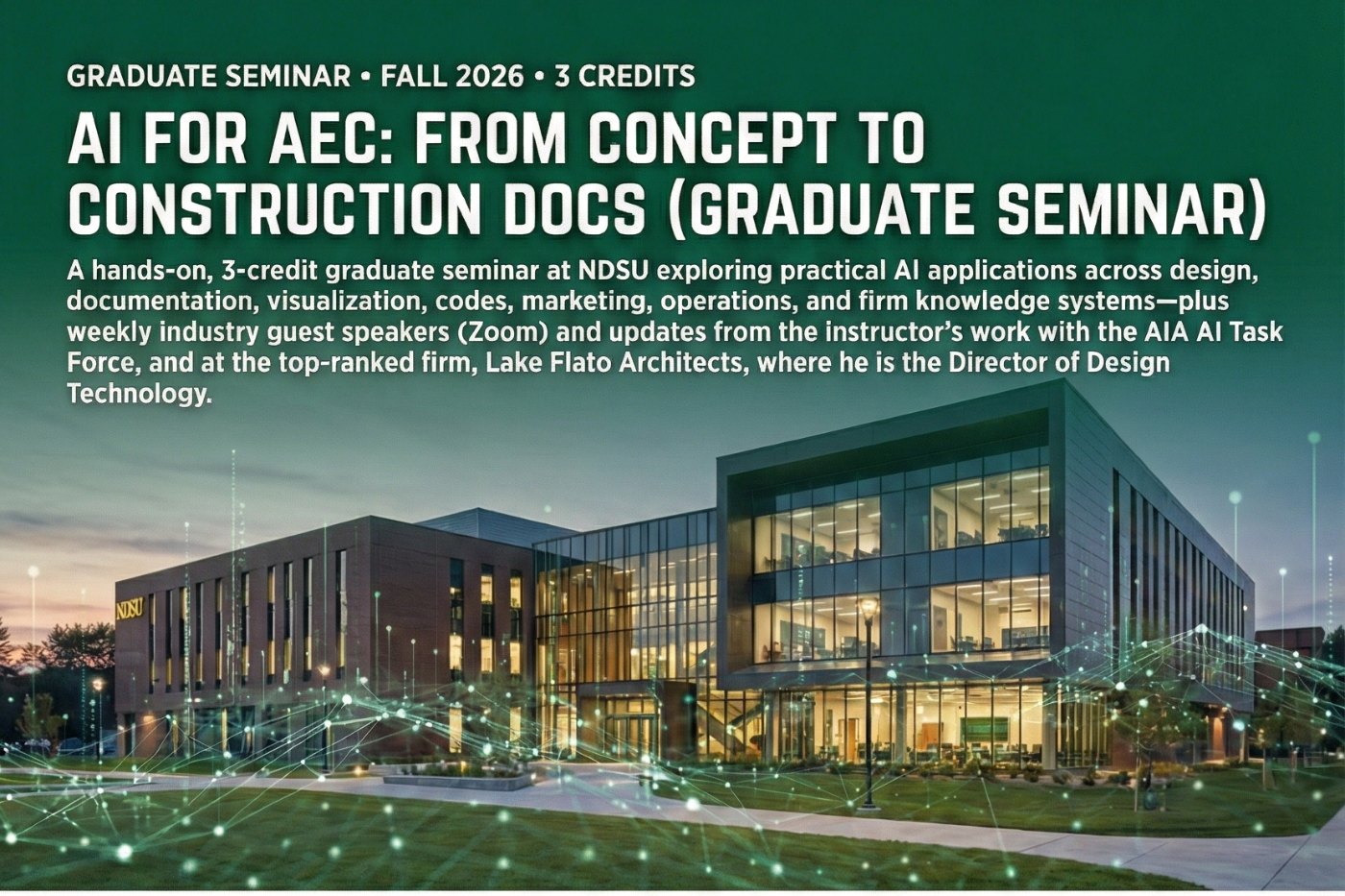
AI for AEC: From Concept to Construction Docs is a hands-on graduate seminar at North Dakota State University, taught while the subject is still changing. Mondays are an instructor lecture and demo in Renaissance Hall; Thursdays bring an industry guest by Zoom. The course is BIM-centered, anchored in Revit and Autodesk Forma, and covers design, visualization, documentation, building codes, marketing, operations, data strategy, risk, and sustainability across sixteen weeks.
There is no textbook. Students carry a Claude Pro seat instead, and every free reading is posted: the RIBA AI Report 2026, the AIA AI Firm Toolkit, the Chaos white paper on AI in architecture, and Databricks on the data lakehouse. Every hands-on submission includes an AI Use and Verification Log recording the tools used, what was changed by hand, what was checked, and disclosure. Students are graded on judgment in applying, verifying, and assessing AI workflows, not on whether a tool produced a polished artifact.